
Biography
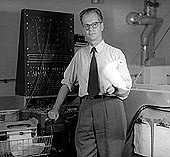
Burrhus Frederick (B.F.) Skinner (1904-1990)
B.F. Skinner was born in 1904 in Susquehanna, PA. Skinner never sought out to be one of the most influential behavioral theorists; in fact, he did not even enter the field of psychology when he first went to college at Hamilton College in New York. Instead, Skinner majored in literature and wanted to become a fiction writer. After graduation, he went to New York City to start his career as a writer, but his attempts were not successful. He believed that it was because he "had nothing important to say" (PBS).
Skinner was always interested in animal and human behavior and was captivated by the theories of Pavlov and Watson (Ormrod, 2004). Because of this he decided to stray away from his efforts of being a fiction writer and went back to school to study psychology at Harvard University. In a time when most pychologists were focusing on introspective psychology, Skinner found himself captivated more by be behavior of organisms. Working in an experimental biology lab, Skinner began to do experiements on the behavior of rats. He created a piece of equipment now known as a Skinner Box. This box placed the animal in a controlled environment where the organisms behavior was automatically rewarded by actions such as pressing a lever or pushing a button. Skinner Boxes are still used in animal research today.
Skinner went on to receive his PhD in 1931 and took a job as a professor at the University of Minnesota five years later. At the university, his literature degree paid off and he wrote The Behavior of Organisms and Walden II. He also continued research on his behavior theory. After noticing that there were always pigeons outside of his office window, he decided to try them in the Skinner Box. The experiements with pigeons helped Skinner develop the theories of operant conditioning and shaping. Skinner was never focused on the internal thoughts of humans, instead, he studied the external forces that shaped an organism's behavior. A biography about Skinner at PBS stated, "He believed everything we do and are is shaped by our experience of punishment and reward. He believed that the "mind" (as opposed to the brain) and other such subjective phenomena were simply matters of language; they didn't really exist. Skinner was known for making audacious statements on this matter (and others), following in Watson's tradition of being provocative, controversial, and an excellent publicist of his ideas."
Skinner returned to Harvard in 1948 after spending nine year at the University of Minnesota and four years at Indiana University as the head of the phychology department. Skinner remained at Harvard for the rest of his career. He wrote a thrid book titled Beyond Freedom and Dignity in 1971. Skinner died in 1990, but his theories continue to influence the field of behaviorism.
References
Ormrod, J.E. (2004). Human learning (4th ed.). Pearson: New York.
People and Discovers: B.F. Skinner. PBS.com. Retrieved 06:55, Oct 29, 2009, from https://www.pbs.org/wgbh/aso/databank/entries/bhskin.htmlSkinner, B(urrhus)
F(rederic). (2009). History.com. Retrieved 07:00, Oct 29, 2009, from https://www.history.com/encyclopedia.do?articleId=222470.